You Just Can’t Leave It Alone

Of all the many and wondrous events that took place at New York’s legendary McGovern’s Bar (and there are countless such events) the one that never fails to amaze is our memory of the night The Beatles debuted a new song, Free As A Bird as a finale to part one of their Anthology Specials.

The guys in Native were at the bar, raptly watching it with all the other patrons who’d gathered around the TV, while Mat Hutt and Steve Greenberg (a.k.a. Steve McGovern) frantically tried to keep up with calls for libation from the teeming horde. Standing in that horde was one Dan Hovey who, along with his sterling band, The Haunted Lobsters, was on the bill for that night’s entertainment.Dan Hovey
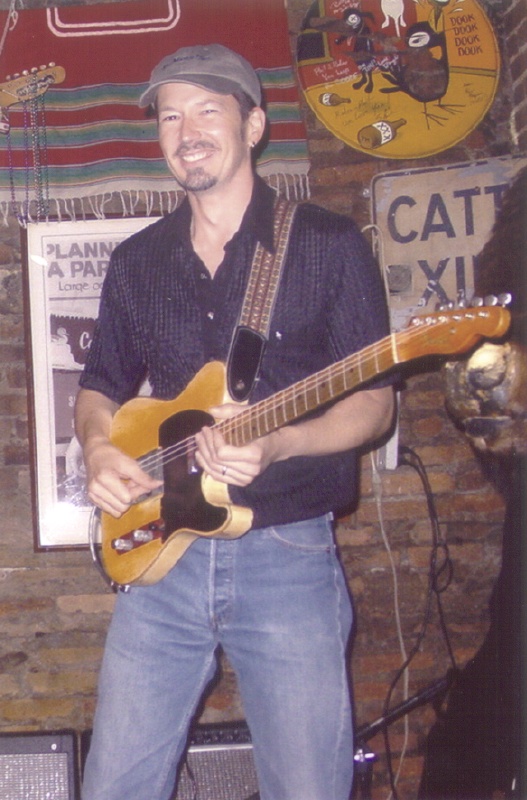
No band in their right mind wants to compete with the Beatles, so it was not thought unusual that the Lobsters were delaying their set until the show was over. Cue the extraordinary video that accompanied Paul, George, Ringo, and John Lennon’s distant, haunting vocals, and the inevitable subsequent razzing Dan & the band got — “Yeah, go ahead, guys! Follow that!

We now come to the part that I hold in amazement — Dan and The Lobsters calmly went on stage, picked up their instruments, and proceeded to play Free As A Bird perfectly from start to finish, a song the whole world had only just heard for the first time. Leaving everyone in the place incredulous and dumbstruck, they went on to perform their set.

The onus was on Native now, as people around the bar turned to us with: “Yeah, go ahead, guys! Follow that!”

We were always in awe of Dan and his buckets of talent. So, when the day came that he presented us with a song, we were more than blown away, we worked harder than ever to do it justice.

Haunted LobstersCan’t Leave It Alone became a setlist tentpole for us. When all else was going wrong, we could reliably pull it out of our bag of tricks and set things right again. It’s such a great melody, and the little turns of phrase throughout are the hallmark of a truly gifted writer of those pesky word-things. In one tune, Dan upped the ante, and we were better for it.

Dan now lives in the D.C. area. His website is danhovey.com. We’ve tried to contact him through it, but the mail folder appears to be not functioning. So, here’s our way of saying thank you, Dan. You are a better man than we. Your guitar prowess is unassailable. Your songcraft is inspiring. And, The Haunted Lobsters live on in the firmament of our collective amazement. Rock on!!!
Can’t Leave It Alone

Just Want To Love You

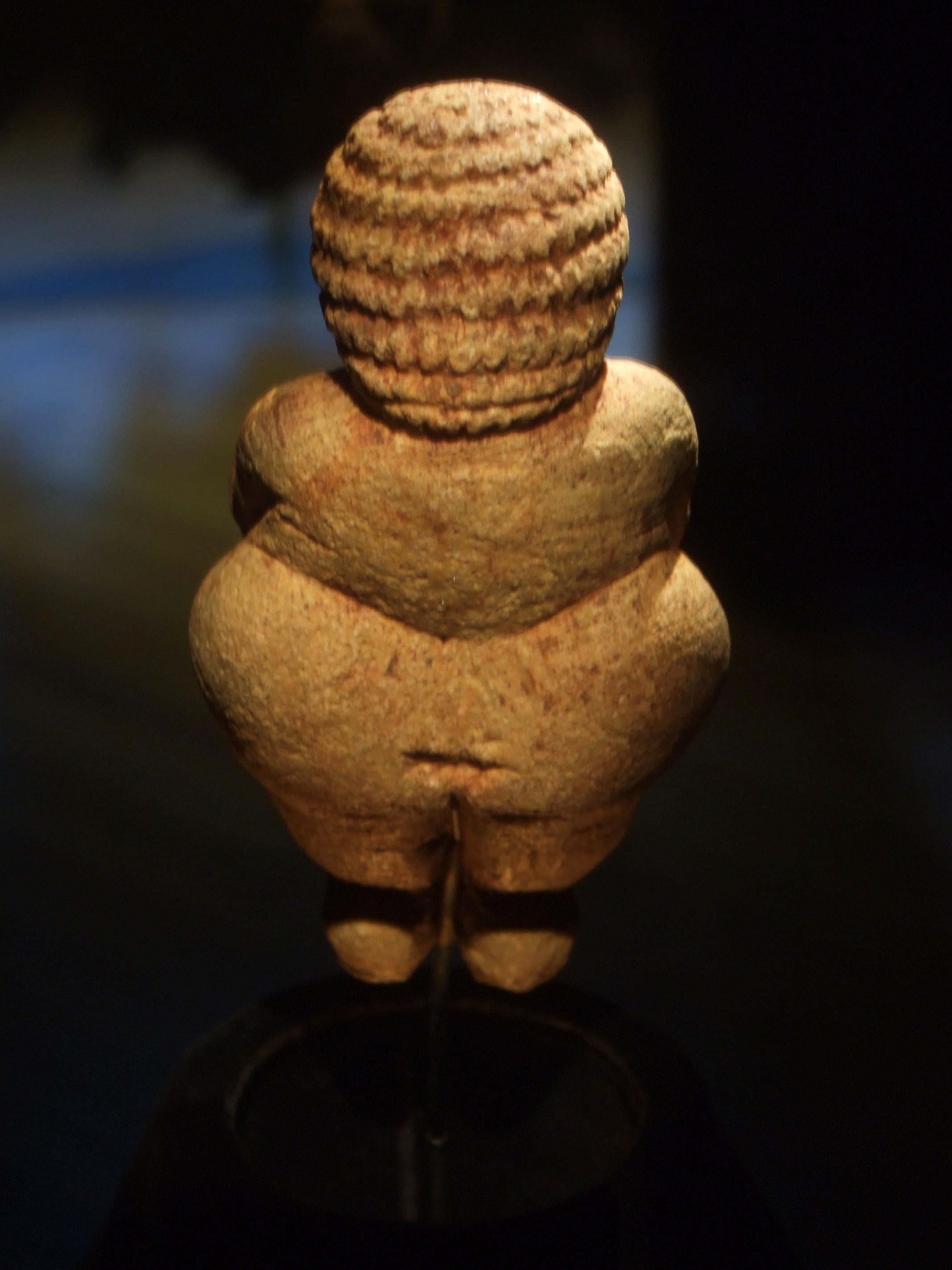
Love has confounded, confused, and consternated the world’s greatest poets down through the ages. Ancient cave drawings depict hunters bringing food to their little honey back at the grotto. The earliest artifacts known to mankind are fertility totems such as the Venus of Willendorf . From Shakespeare’s earliest sonnets to Taylor Swift’s latest flame-outs, love’s mystifying ways are laboured over with analytical acuity surpassing any other subject, no matter its popularity — sorry, Pro Football and Women’s Shoes.

Venus of Willendorf

Venus of Willendorf by Matthias Kabel

Love is the focal-point of every moment in our waking lives, whether we are aware of it or not. The poets knew, of course, for love has played muse to countless and uncounted lyrical flights of fancy, and not-so-fancy. Even so, it is the most elusive of subjects, evading the grasp of so many would-be giants of literature. It is simultaneously secular and sacred. It’s evident in a child’s first gaze, and it’s invariably cited in the eulogy after that child has grown, lived a full life, and passed from this mortal coil.

The extent of our love defines us. Which brings me around to the subject of today’s featured song.

Michael Jaimes wrote Native’s purest ode to the venerable subject of love somewhere around 1995. Just Want To Love You was first performed on a demo recorded at the infamous Marmfington Farm Studio in that year, and my chief memory of the occasion was how simple, stark, and direct it was in dealing with this most universal and pervasive of subjects. It became a tentpole in our setlists from that day forward. It even migrated into the repertory of later bands in which Mike played, like Spacebar.

Native had many songs that dealt with love, but it was always in the context of circumstances arising from the emotion, the detritus of love, if you will. It’s not an uncommon occurrence for a lyricist to write of love in such roundabout ways, indeed in rock music it’s the more likely route. After all, the definition of corny is found in love songs, and no self-respecting rock star wants to ever be on the same planet as corny.

But, Mike just dealt with it head-on. I found it very brave. He says what he will do, and will not do in love. And in that simple act, he defines his own very essence, for how we love is who we are.

Just Want To Love You

I Think, Therefore…

Frank Hightower, the character in the song, I Think, Therefore… from the new Native mini-album December Roses, is a man who has done what most of us only dream of doing — he’s completely run away from reality and gone to live in a hole in the ground. He’s hunkered, bunkered, cut-off, and removed. His cynicism has peaked, and his answer to that cynicism is to hide away.

But, cynicism is oft-times merely a result of misreading the message of events.

When something bad happens to us we want to blame something, point fingers, shout, look defiant. We swathe ourselves in piety, wallowing in the luxurious agony of being so greatly misunderstood. We seek sanctuary, solitude, aloneness. We seek a lonely mountaintop on which, there and only there, can we reflect, assimilate, attain the higher fruits of existence, find true meaning, reach Godhead.

But, rather than a mountaintop, we settle for a hole. Not even a cellar, but a cold, dirty place in which to drill down into the furthest recesses of our darkest side.

Fortunately, we are creatures that like comfort, and before long we emerge from the gravelly depths. Sometimes renewed, sometimes regressed, and sometimes enlightened.

Frank Hightower is not exactly the emergent hermit triumphant at the precise moment in his life this song occupies. Far from it.

The hole he’s dug himself into has reached that most paradoxical of happy places — rock bottom.

He’s starting to ponder whether maybe, he might just have misread events.

He’s considering the question of his own thought processes, his powers of judgement, his criteria. Is he, or is he not the ultimate arbiter of what fate bestows?

I Think, Therefore…

December Roses Is Here!

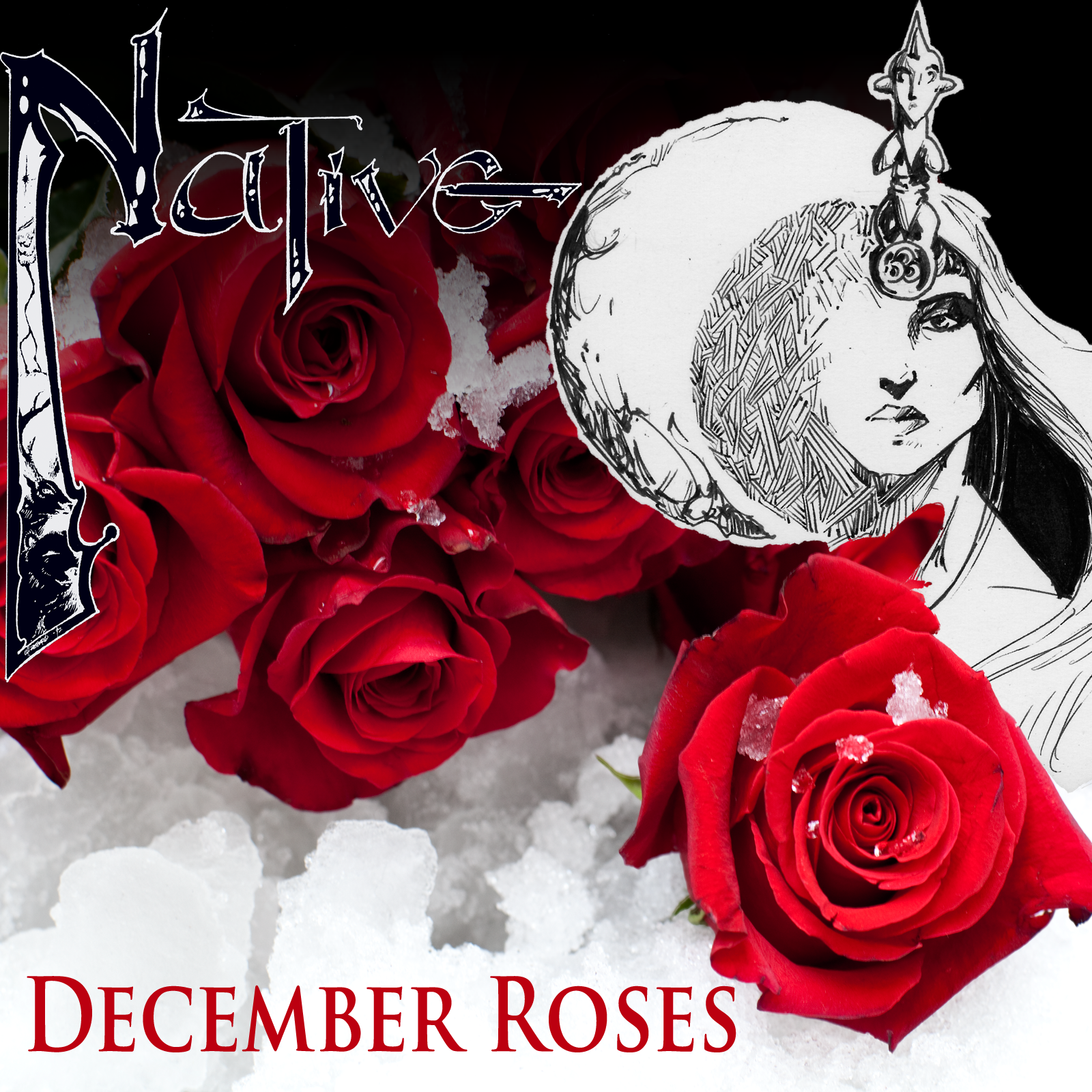
December Roses cover

Just in time for the festive season, Native is releasing an all-new mini-album — December Roses!

Recorded by the full band linep-up: Mat Hutt (Vocals, Guitar), John Wood, (Vocals, Percussion), Mike Jaimes (Vocals, Lead Guitar), Matt Lyons (Bass), Chris Wyckoff (Keyboards), and David Thomas (Drums, Vocals).

Produced by John Fitzwater & David Thomas, December Roses displays a band at the peak of its powers. The performances are stellar, with Mat, Woody & Mike harmonizing better than ever, the rhythm section of Mat Lyons and Dave Thomas cooking up one hot groove after another, & the extraordinary flights of incendiary, cosmic guitar virtuosity of Mike Jaimes at his apex. Throw in the Cajun-infused piano of Chris Wyckoff, and wonderful guest appearances by Catherine Russell and Lizzie Friel (aka, Lizzie Love), and you have the perfect choice for holiday listening. Or, any day, for that matter.

December Roses is not a Christmas album, per se, but rather a meditation on the feelings one gets this time of year, which in the contradictory-logic of Native, makes it a perfect summer album as well.

Check it out today! And, remember — there’s no better holiday gift than December Roses.

Buy Now at Bandcamp

Coming soon to all other online music retailers.

Love Will Leave You Mystified!!

Mystified is a song Native played a lot right before we made the recordings that would become And Then What and December Roses. It quickly became a fan favorite, and a band favorite. It’s rousing, rambunctious, has great sing-a-long harmonies, and it modulates!!! There’s nothing like a good modulation.

When I wrote it, I was writing to myself, trying to pep myself up after a very trying period where my marriage fell apart — so it’s not a diatribe against the fine institution of wedlock — just the words one says to make a friend feel better by downplaying the importance of it. Matrimony does not suck — I want to be on the record about that.

And now I am!!

With the release of December Roses I can finally rest easy, knowing that such a great song is out there, after such a long waiting period.

Why did it take so long to get it out?

Well, the whole history of these recordings is one fraught with delays, disaster, distractions, more delays, and finally — dismay.

We started to make an album in late 2000, convening at our Marmfington Farm Studio located in a top secret location everybody knew about on 26th Street, NYC. Our long-suffering soundman, John Fitzwater helmed the Producers seat and the band proceeded to enthusiastically lay down the many new songs developed since 1998’s Exhale On Spring Street.

Things went great, then things went bad.

Mat moved to California, something we knew was coming, but he and we did not want to break up, and the proof is this stellar set of recordings, surely our best.

When Mat moved away (after an epic gig at Wetlands) the rest of us continued on with completing the record, such was our love of the music.

But, Marmfington Farm was not a fully air-conditioned studio and we made the fateful decision to take a hiatus on recording for what was expected to be a long, and very hot summer.

Indeed, it was. But we scheduled a session with Mike to do his guitar leads. The day we scheduled it was September 11, 2001.

Next week, the story of the amazing journey to finishing the album continues… till then — remember,

Love will leave you —

Mystified

Running Smooth

Dave Thomas on DrumsI have few recollections of recording our first album. I was ill with walking pneumonia, which meant I was operating on auto-pilot for three long days as I laid down my drum tracks in a studio adjacent to Union Square on 17th Street.

I remember a few scant pieces of it — wondering why our co-producer was wearing spandex (it was 1994, for gosh sake — nobody wore spandex in 1994, except our co-producer. I, wondering why the same guy was hating on my drum style (and why was a guy in spandex with bad taste in drumming co-producing our record?). I can faintly remember a few moments of the last track we did, The Sea, and having an equipment breakdown with the Alesis D4 drum module I used to get tabla sounds. Woody quickly jumped into the fray and played the sounds on a different device, but it was nearly the last straw for me. In my delirium, I drummed along with a click track that played only in my headphones while the rest of the band had only my drums in their cans. Doing my part of the song without the tabla patterns I was used to playing was bad enough but, when the click track broke down mid-way through, I simply soldiered on and ignored it. But, let me tell you — playing music in spite of an out-of-control drum machine in my ear was a nightmare. And no one believed me later, when I complained about it. The engineer told me it couldn’t have happened, “It’s quantized, man!” Nevertheless, they kept that take and it’s what’s on the album.

I was extremely ill for weeks after that, and I never again attended a session. Mat would come home with tapes of the ‘Ruff Mixes’ and they sounded pretty good, although to this day I can’t listen to The Sea without wincing from the memory of that poorly-quantized drum machine, my valiant but unsteady performance, and the ridicule of the engineers.

That terrible experience eventually led to my learning about record production — I was never again going to be at the mercy of technology that I didn’t understand, or engineering staff that were hostile to the very sounds and styles that got us into the studio in the first place. I guess I wouldn’t be a record producer at all, had it not been for all that agony and frustration.

And in grand irony — the D4 module started working again. I still have it!

So, for me, it’s a compromised album, and one I want to revisit. Next year will be the twentieth anniversary of that recording, and I’d like to remix it for that occasion. But, I may not be able to remix my bad memories of pneumonia, spandex, and ‘quantized’ click tracks.

In the weeks after the recording was done, I recuperated and we were back on the road, playing bigger and better shows, and the ordeal of making the record subsided. Times were good again…

We were Running Smooth

Cornbread Wednesday

Mood Swingers About Town

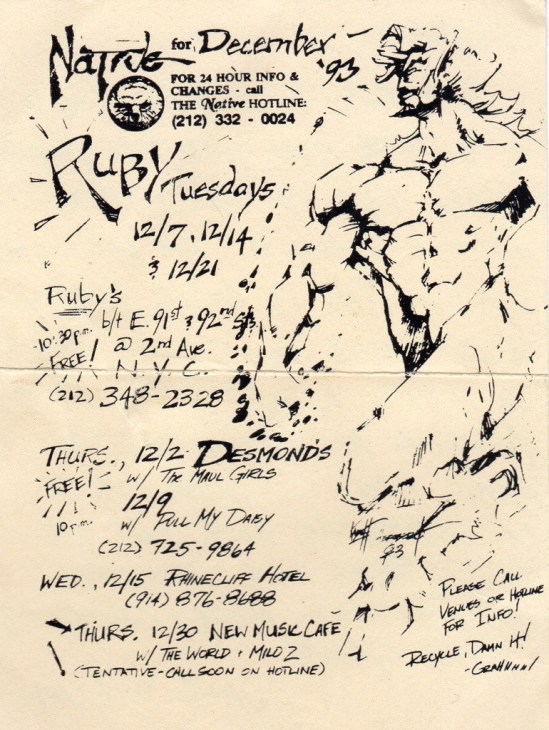
Native was rolling by the time we started recording our first album. As evidenced by this Karl Ottersberg-drawn flyer which lists our December 1993 gigs.

20121211-144045.jpg

The game plan was simple, we can’t tour the world, but we can tour Manhattan. We can get a residency at a New York club, and play other clubs about town. We can make the world come to us. And of course, we can play nearby places in New Jersey and upstate New York.

The first part of the plan was based on a successful run we did at Larry Bloch’s Wetlands. The second leg came to fruition at Ruby’s on the upper East Side. How, or why we ended up there is a story yet untold. But, we played there every Tuesday for a long time, and it’s where we jammed with our first celebrity — Ivan Neville.

Before long, we decamped to another New York venue, McGovern’s. Steve Greenberg’s venerable nightclub became our home away from home for many years.

The above flyer’s inclusion of a date at The Rhinecliff Hotel shows that we were starting to travel a bit further afield than before. For this, and all our galavanting around NYC, we got a van. The Silver Cloud, we called it, and truly. For, it rode the way a cloud floats, and it was silver. For me, this conjures up the image of The Lone Ranger’s horse, a faithful, trusty steed — although, not actually silver-coloured like our faithful, trusty van.

The moral of the story is this: Native had a plan, and a van. We were touring New York and thereabouts. We were recording an album. It was a time of incredible highs, and exhaustive lows. Then, incredibly high again. Perhaps inspired by this, Mat & Woody came up with a dilly of a number which, more than any, evokes the memories of that tumultuous time in our career.

Mood Swing

Cornbread Wednesday

The Woodman Arriveth

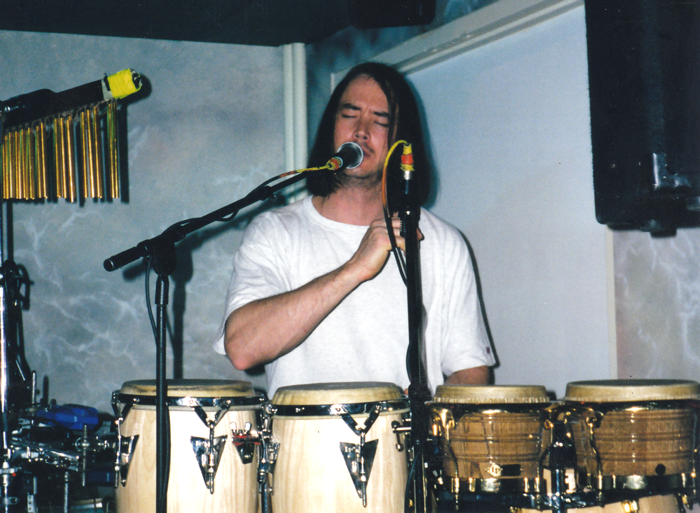
John Wood, (aka Wood, Woody, Woodman, & Toast, Toastman, Stretchy McTallguy, and… to at least one rabid Asian fan —Goody!) has been Native’s percussionist for a long time — although, truth be told, he never actually, officially joined the band! He just showed up on stage at Nightingale Bar on December 10th, 1992 (and played his ass off!). He then continued to show up for every gig we played from then on. He also became the cornerstone of the infamous Native loft, den mother, and the grease that kept the Native machinery rolling.

So, today marks the twentieth anniversary of that event — not joining Native. And boy are we glad it happened, or didn’t happen, as the case may be. We couldn’t have been who we were without him.

Yay Woody!

Woody at Amherst Brewing Company

photography by Kassandraa Tamanini

Nativology Part 2: Fall Away

By the time Native rolled into the studio to begin work on its first album, Mat Hutt had become the chief songwriter of the group. From day one he’d been bringing in strong material and he’d collaborated with the rest of the band when they had song-related ideas but now he’d consolidated that position to become the primary channel through which all new songs were directed.

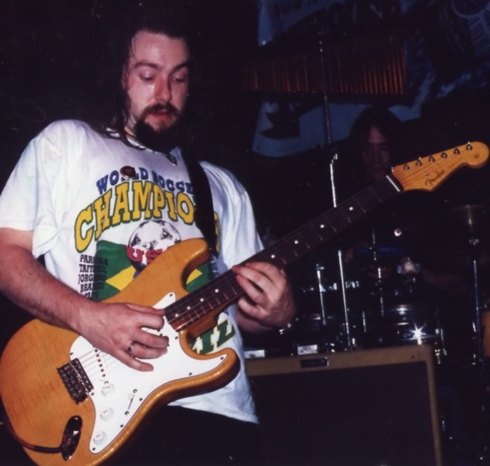
Mat Hutt at Wetlands

And that, for the most part, is a good thing. A band needs someone to be the ultimate arbiter of what is and isn’t right and proper for the band’s oeuvre — is it Native enough? That’s a very good question to ask.

The reason this is a good thing is that there was a lot of new songs being written (particularly by a certain drummer) that were stylistically all over the map. Mat became the siphon that every song went through for the rest of Native’s most fertile period and he made sure that the focus was not just on the strongest material but on songs that really conveyed the unique traits the band had developed, and would continue to develop.

And, of course, he had to sing them, so in hindsight, well, finding that your latest masterpiece has a lot in common with a Cobb Salad (it’s chopped) is a bit easier to understand.

Having said that, this week’s Nativology offering is pure Mat Hutt.

I remember listening to him playing the song at the breakfast table, and wondering what a Native reggae would sound like. I didn’t have to wait long, nor did anyone el
se. It landed on our first record after only a few public airings and remained in our setlists for years.

Fall Away

Down To The River


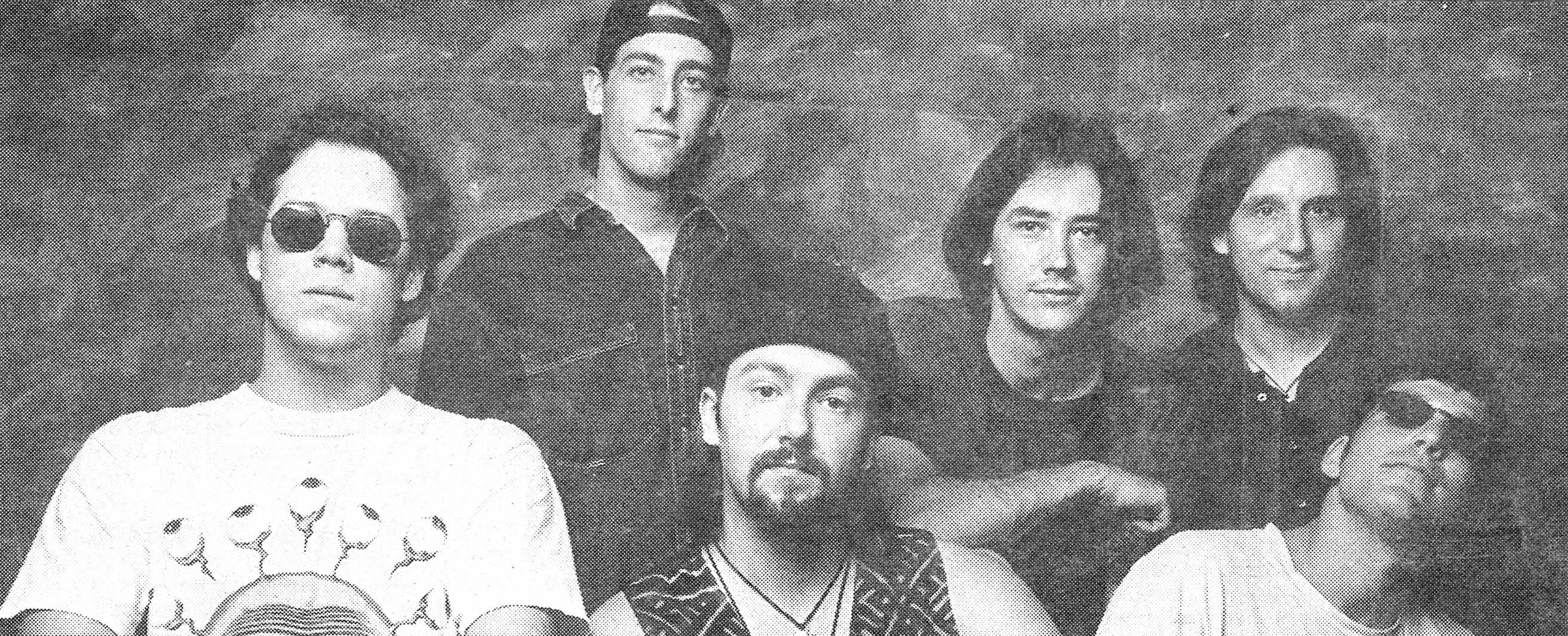
Native Band Photo 1994

photography by Steve Eichner, scanned from newsprint

Mike Jaimes wrote a song in 1993 that became his signature tune. Nativology Vol. 1 featured his home demo of Down To The River. Now, we present, for your approval, the rough mix of the band recording from January 1994.

Recorded at Interface Studios, NYC. Engineered by Lou Gimenez & Dave Weil.

Down To The River