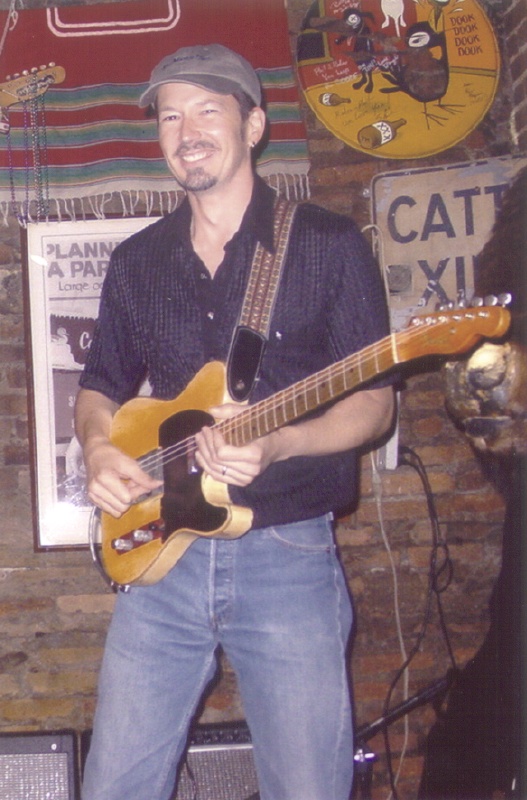
Everyone’s a kid in a thunderstorm

Native‘s on-going recording project, overseen by the redoubtable John Fitzwater was proceeding apace throughout the early months of 1995. By this time, the band were a gigging machine. There was no need to tour, the entire northeast lay before us in verdant symmetry: easily reached from our New York City vantage-point. The entire upper east coast was a corridor down whtich we strode with great alacrity; dashing to a gig in, say, Amherst, and back again to our beds and futons in the self-built cubicles of The Loft, conveniently located in the garment-district environs of midtown Manhattan.

We had made an home for ourselves that was all about developing as a band. We could rise in the afternoon and already be at rehearsal, since it would take place in an adjoining studio — the infamous Marmfington Farm. By combining our forces, instead of having separate apartments, we’d found a way to do nothing but what we wanted to do — play music all the time. Granted, Mike and John Epstein lived elsewhere, but the idea and principle of total focus on music was in place…. and working.

We were playing three and four nights a week on a regular basis — Paul Ducharme, , our manager, made sure of that. Then, rehearsal/writing/recording took place on two days of that selfsame week. We were like clockwork angels in our productivity.

In that context, we offer this snapshot — a demo made in the heady days of yore.

This is another of Mat & Woody‘s collaborations, although they would probably give each other most of the credit. My Cherokee roots are evoked in the recurrent tom-tom pattern in the intro. Mike came up with a typically beautiful guitar-driven theme, and later — a textbook example of how to play a solo; the citing of the theme followed by a stunning flight of light-fingered fancy. I dare any guitarist on the planet to match it.

And then there is the wonderfully-evolving collaboration of Hutt & Wood. More and more, they were approaching the vocals as a duet, like all great duos they held the curves of the melody like race-car drivers in Ferraris at Le Mans.

Add in Matt Lyons‘ signature basslines and the solid support from Mr. Epstein and you have another classic Native tune that somehow defied making an appearance on any of our albums.

Inspired by a particularly violent storm that seemed centered over The Loft, and beginning with an observation on our totally scared reactions in its duration, here is

Thunderstorm v. 1

Digging Holes Again

Welcome to Nativology — where, each Wednesday, we take a listen to rarities from Native’s secret underground high-security vault while enjoying a steaming hot slice of cornbread, slathered in farm-fresh butter, washed-down with generous amounts of kickapoo joy juice!

Or is that coffee with Nutrasweet and extra dried-out creamer? And the cornbread has that weird digital taste to it… mmm, jpegs!

Anyway, we are Native and we are as surprised as anyone to find such a surfeit of riches in our tape library. We were actually quite productive for a bunch of “lazy” hippies!

The studio where we indulgently delved into our every musical whim, was custom-built by our percussionist, the daring and able John Wood, a.k.a. Woody, a.k.a. Toast, a.k.a. Woodtoast, and many other variations, most of them printable.

It was not a large studio, being as it was a room within a room. But, with heavy sound-reinforced walls, and sitting on a bed of thick rubber so the neighbors were not bothered too badly by our twice-weekly rehearsals, it was sanctuary to us.

We dubbed it Marmfington Farm, named after a mis-remembered town we’d passed through on our way to a gig in another mis-remembered town, and that name would become a sort-of catch-all phrase. It meant paradise. When we issued our first (and thus far, only) live album, we named it Live From Marmfington Farm, Vol. 1. Not because it was recorded there, but because we felt that wherever we played — that place became an extension of our paradise.

The song we’ll examine today had it’s origin in that hallowed place. The year — early 1995, in the era when John Epstein was our keyboardist and Native was on fire.

I remember sitting behind my drums watching Mat & Woody working out the lyrics as Mike helped with the chords Mat was trying out, whilst Epstein kibitzed with his often inscrutable observations. At one point, they were stuck for a lyric and I chimed in, “How about — If it doesn’t kill me, it’s made me stronger?” “Nah, too many syllables — If I’m not dead, it’s made me strong. Yeah, that’ll work.”

Like many of our songs, it was born well before we put it on an album, preferring as we did to letting our songs evolve through performance. Happy accidents arising from spontaneous invention are not to be undervalued, and cannot be overstated in their importance. It was a system that worked well for us, although it must be said — it’s amazing how closely this demo from ’95 resembles the track on our ’97 album, Exhale On Spring Street.

So, here it is — one of our best-remembered songs —

Digging Holes

Cornbread Wednesday

Rolling Thunder

In the late winter/early spring of 1995, Native was in the midst of preparing the follow-up to our eponymous first record. Having traveled far & wide to promote that effort, we’d had a whole year to write new material. John Epstein had delivered the excellent Hot Day; Mat Hutt & John (Woody) Wood were coalescing into a formidable songwriting team; I was coming up with my own small contributions; Matt Lyons did not write (but rather chose to lend a big hand on arrangements); and Mike… well, Mike left us gobsmacked and astounded at the sheer genius he could summon when he decided to compose.

I have a distinct memory of thinking that the amount of goodness Mike packed into the two minutes and some odd seconds of today’s featured song had few comparable antecedents. The world in which we operated was the early jam-band scene, where longer is normal, and even longer is even more normal. But, as we finished the first run-through I clearly remember thinking that Mike seemed to have the composition skills of a Jerry Garcia, and the astounding sense of brevity found in that other great California-based tunesmith — Brian Wilson.

The song I compared it to that day was This Whole World, a brilliant two minute plus opus found on The Beach Boys Sunflower. Mike, of course, had not heard that one, and in fact he was not aware that he had packed so much goodness into such a small time frame.

The song was so short that our Sound Wizard, John Fitzwater took a recording Woody had made when he lived on 99th Street at the Hippie Hotel. With a microphone lowered out his window, he’d captured the sound of dogs barking furiously in the courtyard below. Now, those sounds were incorporated into the opening and closing moments, a touch that Mike absolutely loved.

When we played it live, Woody & Mat barked like those courtyard canines, bringing a smile to the listeners, and certifying the wonderfulness of the choice Fitz had made. After all, if most people were looking for a sound effect for a song with the title this one has, they’d have probably reached for a sound-effects record with a thunder track. But, Native was not ‘most people’.

The multi-tracks of this (and all the songs we’ve presented recently) are lost. If anyone ever finds them, let us know. It would be fun to remix them. But, if a remix were possible, the dogs would still be inserted right where they are now.

(Click on the following link to go to our Bandcamp page. This song, like all the selections in our Nativology series, are free to listen to, and download in the file type of your choice.)

Rolling Thunder

Cornbread Wednesday

If you don’t risk anything, you’re gonna risk it all

This is Nativology.

Every Wednesday, Cornbread Wednesday, that is, my band, Native posts an unreleased song from our vast underground archives in the Cave of Dave.

I, the just-mentioned Dave, as Archivist, Historian, Rockologist, and all-round Pain in the Ass, do ascribe to scribe some scribbles about said unreleased songs, in the hope that the listener may have some contextual coherency, greater musical understanding, and less of a need to jump out the window.

Music can do that. Especially good music. And, music that is damn good — well, that might actually make you feel like shutting the window, cracking open a tall, frosty one, and telling Ethel to put on that crazy flannel thing with the straps.

Today’s selection hails from the mighty year of 1995, when men were men, and women were getting sick of it.

Mat Hutt is the main songwriter of this piece, and it comes to you today as an unreleased tune for a fine, very understandable reason. But, it’s one we’ve forgotten. Now, armed with the 20/20 hindsight of our 20/20 foresight, we can see that it was more like 20/20 shortsightedness. We rarely played this wonderful song much, and it never really got its’ day in the sunlight; it was left on the shelf like a can of dried tomatoes.

Mat, our chief songsmith, really delved into transcribing and translating our tacit belief that if we put ourselves out there, on the line, performing all the time; if we were perfectly willing to starve in the process & utterly fearless in the face of the vast Dali-esque plane of existence that is an artist’s life (complete with melting watches and Madonnas made of bees), that we would persevere.

To do otherwise, to waste our talent and bend to conventional wisdom, which says: “Get a job, Jerkface. Music is a nice hobby for special people, of which you are not one.”

But, the problem with conventional wisdom is that it is rarely conventional, and never wise.

Mat got it right. Not just for us, but for anyone with talent who dares to throw themselves out there, Candide-like into the sometimes fulfilling, oftentimes uncaring, always-changing Tilt-a-Whirl world a performer faces each night:

If you don’t risk anything, you’re gonna risk it all.

So, I’m going to sing for you

Even If I Fall

Cornbread Wednesday

A Hot Day in the Studio with John Epstein

In the wintry months of early 1995, Native was in the midst of an extended song-writing period. Our self-titled first album had been out for a year, and it seemed to the band that, as good as it was, the issues we *did* have with it all centered around the fact that we had little control over the aspects of its production. With that in mind, we set about preparing an album we would produce ourselves. And with our ever-growing prowess at songcraft, it was sure to be a far, far better thing we would do than we had done before.

Native was touring quite a lot during this period, as well as enjoying residencies at two NYC clubs — Wetlands on Mondays, and McGovern’s on Wednesdays. With rehearsals on Tuesdays & Thursdays, and longer treks out to the northeast corridor on weekends, we were in our first prime period. We were starting to headline our own shows more & more, and gigs at larger venues like Tramps (opening for the Dixie Dregs) loomed ahead.

In this hothouse period, the band arrived for a session at Marmfington Studio one frosty Thursday wherein John Epstein unveiled his newest song which, in my not-so-humble opinion, ranks easily as his greatest contribution to Native’s catalogue. Considering the freezing New York City winter outside, we were bowled-over by the warmth of both the out-of-context setting (Florida) and the emotions conveyed (love & respect) John so eloquently infused in every measure.

To this day, I find myself amazed at the completeness it had. Usually, the band would work hard to expand on our songs. Mike, especially, was great at coming up with bridges and musical passages. But none of this was needed for this unexpected delight, which went to the top of our shortlist for the projected album due to start in the spring.

Unforeseen events would make that album an impossibility, so now all that exists of this rare song is this demo, recorded live to DAT by John Fitzwater one very, very cold evening.

Hot Day

Cornbread Wednesday

The Return of the Nativology: Call My Name

Nativology Vol. 2 resumes as we harken back to those thrilling days of yesteryear, and explore the songwriting and evolution of Native.

Native toured constantly throughout the nineties. The five core members of the band lived together in a Garment District loft, just steps away from Madison Square Garden. The living environment suited the hothouse atmosphere of creativity that was surging and burgeoning in the nascent psyches of the band.

Everyone was writing tunes and had the luxury of a band at arms’ length to give it a go and see what the darned thing sounded like. Today, we call that Protools, only that software is not programmed to have opinions or tell you that you smell bad.

When John Epstein joined up in late 1993, all attention was given to catching him up on the songs that existed before his entrance, recording an album with two hurriedly-written songs by him, and playing an endless amount of gigs to support the eponymous album.

By the early winter of 1995, all that was done & dusted. It was time for some new tunes.

We already had today’s featured tune on the back-burner, and had done an interesting version of it at Epstein’s old alma mater, the Institute for Audio Research (IAR), in late ’94.

But now, armed with a new Tascam 8-track cassette recorder, we gathered with our live soundman, John Fitzwater, to initiate a series of recordings that would run throughout the Spring of ’95.

This, and the mixes that will follow in the coming weeks, no longer exist in the Native vault in their multi-track form. So, we will be presenting them in all the glory of their original mixes, done by Mr. Fitzwater, with us looking over his shoulder and being really annoying.

Call My Name

Cornbread Wednesday

December Roses (Red)

December Roses (Red) is one of my favorite Native tracks, and it shows that during our final period of writing/recording we were continuing to evolve and improve.

I can’t be all pedantic, impartial, and removed about this one. No amount of objectivity is available to me. When I hear it, it’s like a piece of my very being has been painlessly removed and made palpable.

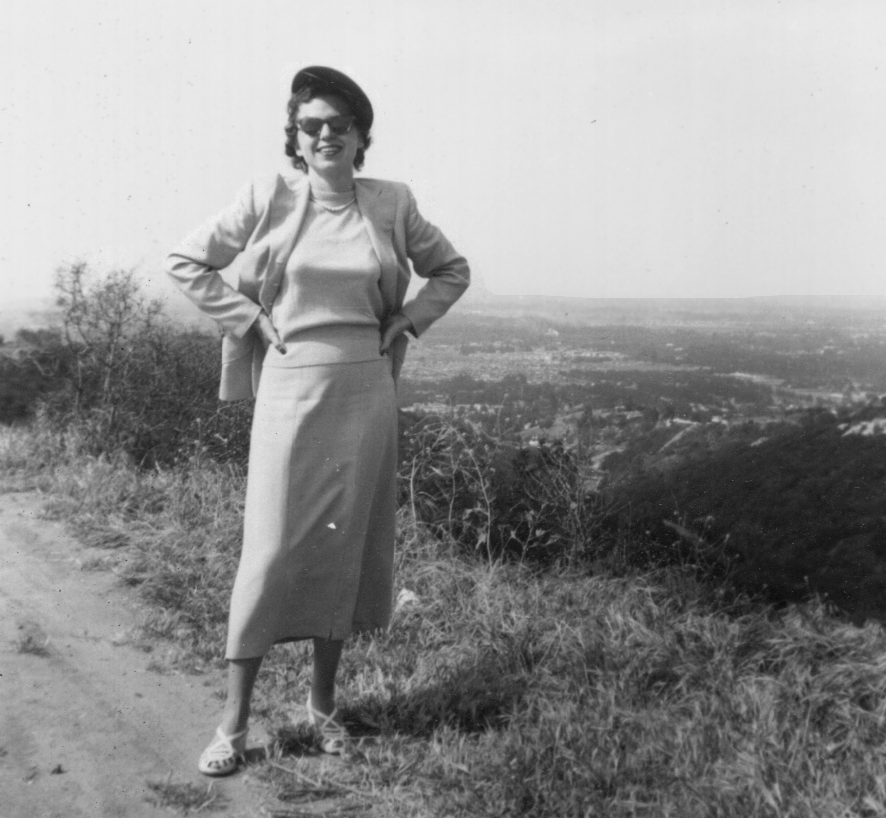
Joyce Thomas, Dave's mother

My mother, Joyce, in Hollywood in 1950

My Mom had one song that she played on piano — Debussy’s Clair de Lune. I think of her whenever I hear this tune. It’s both the saddest and the happiest song I ever wrote.

December Roses

You Just Can’t Leave It Alone

Of all the many and wondrous events that took place at New York’s legendary McGovern’s Bar (and there are countless such events) the one that never fails to amaze is our memory of the night The Beatles debuted a new song, Free As A Bird as a finale to part one of their Anthology Specials.

The guys in Native were at the bar, raptly watching it with all the other patrons who’d gathered around the TV, while Mat Hutt and Steve Greenberg (a.k.a. Steve McGovern) frantically tried to keep up with calls for libation from the teeming horde. Standing in that horde was one Dan Hovey who, along with his sterling band, The Haunted Lobsters, was on the bill for that night’s entertainment.Dan Hovey

No band in their right mind wants to compete with the Beatles, so it was not thought unusual that the Lobsters were delaying their set until the show was over. Cue the extraordinary video that accompanied Paul, George, Ringo, and John Lennon’s distant, haunting vocals, and the inevitable subsequent razzing Dan & the band got — “Yeah, go ahead, guys! Follow that!

We now come to the part that I hold in amazement — Dan and The Lobsters calmly went on stage, picked up their instruments, and proceeded to play Free As A Bird perfectly from start to finish, a song the whole world had only just heard for the first time. Leaving everyone in the place incredulous and dumbstruck, they went on to perform their set.

The onus was on Native now, as people around the bar turned to us with: “Yeah, go ahead, guys! Follow that!”

We were always in awe of Dan and his buckets of talent. So, when the day came that he presented us with a song, we were more than blown away, we worked harder than ever to do it justice.

Haunted LobstersCan’t Leave It Alone became a setlist tentpole for us. When all else was going wrong, we could reliably pull it out of our bag of tricks and set things right again. It’s such a great melody, and the little turns of phrase throughout are the hallmark of a truly gifted writer of those pesky word-things. In one tune, Dan upped the ante, and we were better for it.

Dan now lives in the D.C. area. His website is danhovey.com. We’ve tried to contact him through it, but the mail folder appears to be not functioning. So, here’s our way of saying thank you, Dan. You are a better man than we. Your guitar prowess is unassailable. Your songcraft is inspiring. And, The Haunted Lobsters live on in the firmament of our collective amazement. Rock on!!!

Can’t Leave It Alone

Just Want To Love You

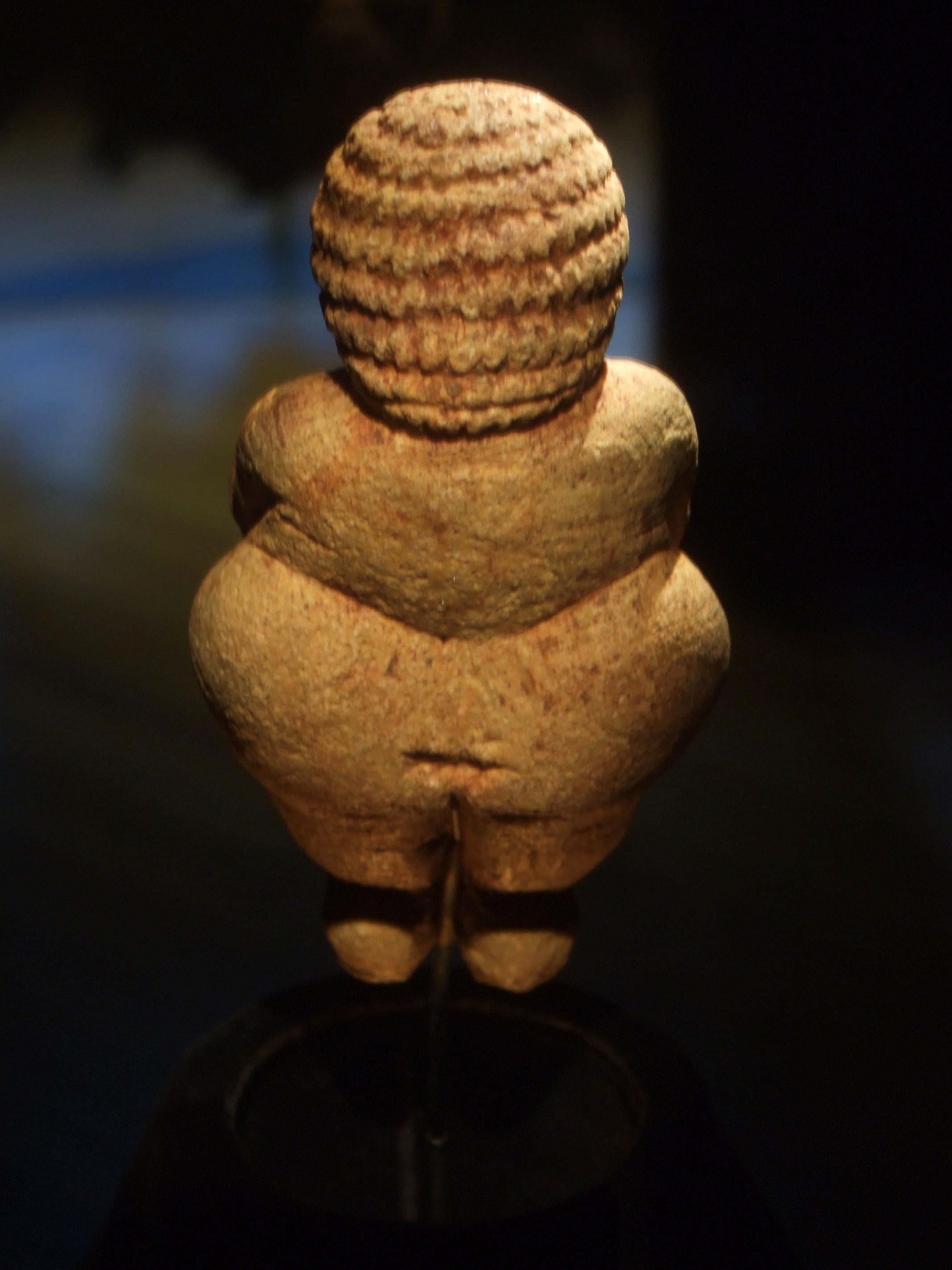
Love has confounded, confused, and consternated the world’s greatest poets down through the ages. Ancient cave drawings depict hunters bringing food to their little honey back at the grotto. The earliest artifacts known to mankind are fertility totems such as the Venus of Willendorf . From Shakespeare’s earliest sonnets to Taylor Swift’s latest flame-outs, love’s mystifying ways are laboured over with analytical acuity surpassing any other subject, no matter its popularity — sorry, Pro Football and Women’s Shoes.

Venus of Willendorf

Venus of Willendorf by Matthias Kabel

Love is the focal-point of every moment in our waking lives, whether we are aware of it or not. The poets knew, of course, for love has played muse to countless and uncounted lyrical flights of fancy, and not-so-fancy. Even so, it is the most elusive of subjects, evading the grasp of so many would-be giants of literature. It is simultaneously secular and sacred. It’s evident in a child’s first gaze, and it’s invariably cited in the eulogy after that child has grown, lived a full life, and passed from this mortal coil.

The extent of our love defines us. Which brings me around to the subject of today’s featured song.

Michael Jaimes wrote Native’s purest ode to the venerable subject of love somewhere around 1995. Just Want To Love You was first performed on a demo recorded at the infamous Marmfington Farm Studio in that year, and my chief memory of the occasion was how simple, stark, and direct it was in dealing with this most universal and pervasive of subjects. It became a tentpole in our setlists from that day forward. It even migrated into the repertory of later bands in which Mike played, like Spacebar.

Native had many songs that dealt with love, but it was always in the context of circumstances arising from the emotion, the detritus of love, if you will. It’s not an uncommon occurrence for a lyricist to write of love in such roundabout ways, indeed in rock music it’s the more likely route. After all, the definition of corny is found in love songs, and no self-respecting rock star wants to ever be on the same planet as corny.

But, Mike just dealt with it head-on. I found it very brave. He says what he will do, and will not do in love. And in that simple act, he defines his own very essence, for how we love is who we are.

Just Want To Love You

I Think, Therefore…

Frank Hightower, the character in the song, I Think, Therefore… from the new Native mini-album December Roses, is a man who has done what most of us only dream of doing — he’s completely run away from reality and gone to live in a hole in the ground. He’s hunkered, bunkered, cut-off, and removed. His cynicism has peaked, and his answer to that cynicism is to hide away.

But, cynicism is oft-times merely a result of misreading the message of events.

When something bad happens to us we want to blame something, point fingers, shout, look defiant. We swathe ourselves in piety, wallowing in the luxurious agony of being so greatly misunderstood. We seek sanctuary, solitude, aloneness. We seek a lonely mountaintop on which, there and only there, can we reflect, assimilate, attain the higher fruits of existence, find true meaning, reach Godhead.

But, rather than a mountaintop, we settle for a hole. Not even a cellar, but a cold, dirty place in which to drill down into the furthest recesses of our darkest side.

Fortunately, we are creatures that like comfort, and before long we emerge from the gravelly depths. Sometimes renewed, sometimes regressed, and sometimes enlightened.

Frank Hightower is not exactly the emergent hermit triumphant at the precise moment in his life this song occupies. Far from it.

The hole he’s dug himself into has reached that most paradoxical of happy places — rock bottom.

He’s starting to ponder whether maybe, he might just have misread events.

He’s considering the question of his own thought processes, his powers of judgement, his criteria. Is he, or is he not the ultimate arbiter of what fate bestows?

I Think, Therefore…