Should I compare thee to a summer’s day?

William Shakespeare was called ‘The honey-tongued bard of Avon’ for a good reason. Aside from his plays, Good Will was renowned for his sonnets, which he wrote throughout his illustrious career, mostly for a private readership, and, as incredible as his plays have proven to be – it is through the ‘sugered sonnets’ that he was able to, as Wordsworth put it, “unlock his heart.”

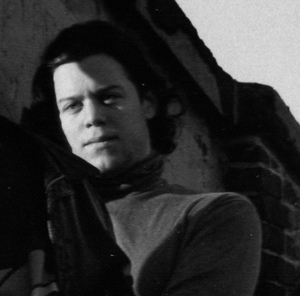
Not surprising then, that the lead singer of a twentieth century musical act called Native, a singer who had trod the stage himself at the American Academy of Dramatic Arts, would turn to the Bard for inspiration.

Mat Hutt was really on a roll at this point in the band’s trajectory. By himself, or in collaboration with John Wood, he’d already written enough strong songs in the preceding year to fill an album, but the music was flowing out of him with such regularity that when the decision was made to invoke Shakespeare’s sonnets as lyrics, much time was afforded in carefully choosing the lines that would be quoted or paraphrased in this newest masterpiece.

The line in today’s title is from Sonnet 18, but careful examination shows that today’s featured tune culled lines from all around Mr. William’s canon. Long hours around the kitchen table were spent poring over the sonnets, plucking a line here or there and fitting them in place, like jewels in an ornate piece of jewelry.

As it took shape, Mike Jaimes contributed mightily to the construct, with more than a small influence on the utltra-rocking middle section. With the addition of the rhythm section and the Elizabethan stylings of John Watts, the song was a complete epic, soaring and majestic.

Shakespeare wrote 154 sonnets in his time, but Native edited together fragments from those works, and invested them with such grace and furore that a seemingly new one was born. Which is why we called it —

155

Cornbread Wednesday

New Native EP – December Roses

Native will be releasing an EP next month, with a title that befits the season — December Roses.

Drawn from the same sessions that begat Native’s And Then What album, December Roses showcases the band’s strong songcraft and production capabilities.

Recorded over a spanse of years, beginning in late 2000 and continuing up until the tragic death of lead guitarist Mike Jaimes in 2006, December Roses reveals a band at the height of its powers.

The release date will be announced soon, but know this —

Native will be sending you roses this December.

Something Worth Remembering

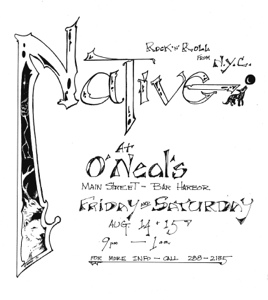
It was 20 years ago today… the day Native played its first live gig. 20120813-195029.jpg

Native was formed in the winter of 1992 and the story of that coming-together is something I’ve long pondered. For, like Bart Simpson, I can’t help but feel partly responsible. I recently transferred the band’s multi-track demos, nearly a decades worth, and they really brought back all the memories of where we were, what we were doing, and why we were doing it when we were doing it.. Sadly, we can’t really have a true reunion for our anniversary – we live too far apart, and Mike’s absence makes it difficult to even contemplate. So, I tried to think of a good way to celebrate our 20th Anniversary in some other significant way, and I thought of this, Nativology. We’re going to take a little trip through time and through the Native tape vault. Not for live shows (that’s an archival project unto itself) but through the wonderful multi-track recordings we made at our studio, first on Mott Street, then at the studio where would thrive for a decade, Marmfington Farm. I think you’ll be surprised at how much material Native had that never got onto one of our albums, and at the quality which only grew as our songwriting powers matured. We thought of each song as a fully-fledged production. But only today are we capable of giving them a sympathetic mix they so richly deserve. Now, don’t expect the polished sound of our big-budget records. These mixes retain the rough-hewn low-cost quality of the recordings themselves: The drums and bass, in particular, are often on the same tracks, which makes them difficult to mix. But I really had fun mixing Mike’s guitar a little more adventurously than we had on our studio efforts. And so, with that — let’s trek back to the beginning.

The origin of Native:

Mike Jaimes

photo by Dean Thomas

20120813-194200.jpg I was an ambitious drummer. I joined many bands, figuring that my odds of finding success were multiplied. However, that old bugaboo, my own original songs, kept popping up. Eventually, the urge to play my own tunes began to outweigh the rewards of being a side-man. One of the groups I was playing with broke up, and I found myself the sole occupant of a large space on Mott Street, or perhaps I should say under it. The room was large enough for several bands to share. The studio was four flights down, and undoubtedly drenched in radon, but it was no problem finding groups that would be glad to rehearse and store their gear there. One of them, The Spin Doctors, were particularly inspiring to me. Mott Street became a sanctuary where I was able to explore these song ideas that drummers aren’t supposed to have. I acquired a Tascam 4-track cassette recorder and recorded the first track in this ongoing anthology, a beseeching ode to a lady of the road. My collaborator, Mike Jaimes, basically took over, adding bass, guitar, organ, and vocals. So, here it is — the song that really got the ball rolling for Native – Something Worth Remembering.

Tomorrow, Mat Hutt, John Wood & Anthony Balsley are at the same time having the same thoughts about starting a new band… except Anthony.