Another Cornbread Wednesday!

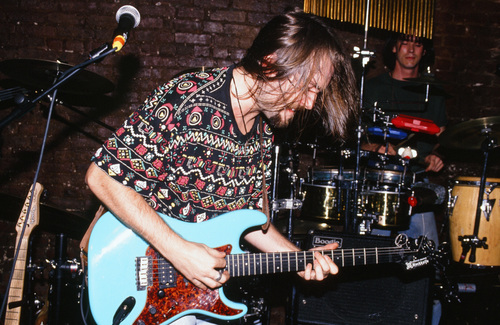
As with the last few posts, we’ve been going through the Native tapes from that hallowed era – 1996, when men were men, women were women, pants were optional, and Native was effing Native!

This week, to make up for being absent in our duties to bring you the best bloggage we possibly can last week, we give you not one, nor two, not even three, we give you four songs from the treasure trove of great McGovern’s tapes that were spun by our dear friend and manager, Paul Ducharme, and our equally dear aboriginal misfit/soundman, John Fitzwater.

We’d like you to think of these four cracking numbers as bonus tracks to our album, Live From Marmfington Farm, Vol. 1. For, lo! They emanate from the same time period that yielded the performances heard therein.

This particular night, many of the songs ended up incomplete on the tape that resides in our monolithic vaults deep beneath Mount Olympia in the garment district of Manhattan.

The tape is mind-bendingly incomplete – more songs are cut off than those that aren’t.

But, miraculously, these four astounding performances tell the tale of that fabled night. We begin as Mike Jaimes, arguably one of the greatest guitarists in the history of ever, teases the crowd with a small, delightful snatch of an iconic tune —

Interested Third Party (McGovern’s 6-3-96)
Big Boss Man (McGovern’s 6-3-96)
I Am (McGovern’s 6-3-96)
Corrina (McGovern’s 6-3-96)

Cornbread Wednesday

Ladies & Gentlemen, Mister John Watts!

This weeks Nativology excavation is, as far as we can remember, the only song John Watts wrote and sang lead on in his entire amazing 2005-07 tenure. Our memories of those smokey, smokey, drinky, drinky days are hazy at best, so don’t quote us on that one. As drummer Dave ‘Hollywood‘ Thomas continues to unearth rarities from our vault, we may yet find another example of his way with a melody. We sure hope so.

John is very good at arranging, which was the great boon of having him in the studio when the songs were in their nascent stages. Things like the middle bits of as tune — the solo, the breakdown, the bridge, or just the good old bog-standard one-note jam — all these things and more were John’s stock in trade. For the most part, Mat Hutt & John Wood were the songwriting dynamos, with Dave bringing in a tune now and then. Every great once in a while Mike Jaimes would bring in a song, but that was becoming more and more infrequent – he, like John, loved to delve into the arrangements. And if all that talent was stymied for an idea, we could count on Matt Lyons for that crucial way out of a musical painted corner.

It was a hothouse atmosphere of creativity at Marmfington Farm in the year of 1996, when Native ever so briefly added this really great tune to our setlists.

Listen for the excellent harmonies, the metaphor-laden lyrics and playful vocal of Mr. Watts. And, don’t miss the show-stopping solo by Mike.

Most bands would kill to have a song like it in their repertoire, but with a songlist bursting with riches, today’s featured tune suffered a very short shelf life. So far, this is the only recording we have of it.

So, thank goodness it’s a fantastic recording made by the staff at Wetlands — Dave Nolan and John Laterza.

Ladies & Gents — here’s John Watts schooling us all about the beast within, the —

Tyrannosaurus

I’m No Boss

By late summer 1996, Native was either gigging, recording, or rehearsing nearly every day of the week. We were on an incredible ride thanks to our manager’s, Paul Ducharme’s, growing contact list, and the various NYC clubs where we had built relationships where they just automatically booked the band on a monthly, bi-monthly, or (in the case of McGovern’s Bar on Spring Street, near the Hudson River) weekly residencies.

McGovern’s was such a special place for us. The owner, Steve Greenberg, had befriended Dave in the pre-Native days, and was soon to become a faithful comrade of everyone in and around Native, providing gigs in our earliest days, and support in ways that helped us survive those early days — indeed, both Mike Jaimes and Mat Hutt tended the bar, and John Fitzwater ran the sound system, when they needed cash to pay their bills and feed their faces.

In many ways, it was home base to us in the same way Marmfington Farm was, and it cannot be said strongly enough that without Steve’s belief in us, and all his good will, and support — we may not have been able to keep going.

Cornbread Wednesday

As it was, we were able to do more than keep going, we were developing new music at a mercurial pace, and it was during this period that we abandoned making demo tapes and just started playing the new stuff each Wednesday. We found that a positive audience reaction to a song was worth more than listening to the tapes a thousand times. Our night was soon dubbed ‘Cornbread Wednesday’ and it was almost always the highlight of our week (and, the tradition of showcasing new music continues to this day in

this very blog upon which you now gaze adoringly).

Another fixture of McGovern’s was an old-timer who sat at the end of the bar at each and every gig. His name escapes me now, but it doesn’t matter really…. every bar has an old guy like him. Sipping mixed drinks and scowling in a way that makes you think they are not enjoying themselves very much. And yet, next time you play that club, there he is, sitting in the same spot, telling stories about stuff that happened before you were born.

Today’s tune is Mat Hutt’s tribute to that old guy, and all the others like him. We had put it on the Live From Marmfington Farm, Vol. 1 album earlier that year in a version recorded at Wetlands, but this one is from the place were it originated — McGovern’s. I like to think that the old guy is still sitting at that bar, telling war stories, complaining about how awful everything is, and profanely proclaiming —

I’m No Boss

You Keep Me Running Smooth

Hey Native People!

Dave Thomas here (just back from my successful negotiation of a peace accord between Mongolia and Peru).

Just to bring the Novatates up to speed — when I’m not saving the world from itself, I’m the drummer in the band. Yeah, by day I’m Mister My Brain’s Larger Than Yours, and I speak only in Minutiae; by night, I’m Animal from The Muppets with an I.Q. like a black hole. In between, I harness the music that lies dormant and petulant in the Native Vault, located far below Fort Knox, Switzerland.

As curator of this vast rubble, it has been my solemn task to present a rare Native performance each week in this blog which you now hold between your sweaty thumb and aorta.

We are currently up to Volume 3 of the epic Nativology series, wherein we investigate the mysteries of Native’s oeuvre by making new mixes from these things humans once called cassette tapes, some of which have been unplayed for tens of years.

Usually, we have put forth recordings that emanated from multi-track tapes, produced in our luxurious studio, Marmfington Farm in sunny Mid-Town Manhattan. All the previous tracks in Vol. 3 have been the product of overdubs and weed.

Now, we sadly bid adieu or orderve to that era. All our mighty, unfocused super powers would be slightly more focused on preparing for the recording of a proper album. But, we also were reminded from time-to-time by that wonderful Leprechaun, Gigs O’Plenty, that we had to go play music in public, and it had to be good, and it was!

But, live gig tapes can be a frustrating menace to endure. The first song is almost always going like a flesh freight train, full steam ahead, before the record button was finally engaged. And get ready for vast sea-changes in volume thoughout the next three to ten songs. Bemusedly, I’ve lost count of the face-palms I’ve made as my and Woody’s carefully unscripted drum solo ends mid-cowbell-triplet with the premature end of side one. Side two, yep, we’ve lost the beginning of that song, too.

DAT tapes came along eventually, and ended the practice of making sure we had no complete drum solos (except one – found on Live From Marmfington Farm Vol.1), but these tiny VHS-like tapes had their own set of peculiarities — brittle, digital sound, and the life-expectancy of an ant with a low white blood-cell count.

So, I’m concentrating on Cassettes for now, as we ease full-bore into the second half of Vol. 3, and the John Watts era is encapsulated by the abundance of what I call ‘orphan’ recordings — great performances found on tapes that are otherwise filled with cut songs, drop-outs, & other sound-related issues.

Here’s a tune from our first album, which stars the affable and bizarre John Watts, in a stirring exercise of ivory-tickling —

Running Smooth

Cornbread Wednesday

One hour of sleep, a one-lane road, and coffee – my co-pilot

I remember when I wrote that lyric. It’s emblazoned on my brain.

It was in the fall of 1996, and Native had been steeped in a period of heavy creativity. But, I had not contributed anything more than the three-year old Barefoot Girls, and I was bound and determined to rectify that situation.

Now, a cursory look back over the sheer number of new songs we’d recorded demos of in the previous year, is daunting. We had more first-class material with which to make an album than we needed. Rover, Digging Holes, Restless, 155 — pretty daunting competition, especially in light of the fact that I’d not brought a new song in during all the tumultuous period stretching back to John Epstein’s reign of benign terror.

Actually, my most recent composition was from ’94 — Missionary Man. A beautiful song, but preachy, and there turned out to be a big hit song with the same name by The Eurythmics. Native dutifully learned it, played it one or two times, and it was quietly dropped. In my embarrassment at that failure, I had foresworn to do better.

All through the next year, I regaled the band with a series of tunes that showed great development in the songwriting department, but they missed the mark in terms of being right for the band. Some were very pop-oriented, some hearkened back to the hard-rock Native of the Anthony Ballsley era, and some were just plain strange.

No wonder that my newest creation was met with a bit of skepticism and poorly-masked dread. I’ve often joked that a band’s worst fear is a drummer who writes, and that joke stems from this period. Nevertheless, I soldiered on in earnest effort. I had a lot of music in head, and it needed to come out or I was going to go crazy. Or, maybe I was crazy and was trying to work my way back to sanity, and music was my medium. I became fixed on the idea of coming up with a song that would put my yearnings into a palatable package.

Suddenly, I did just that. So, surprised was I at my breaking through the ice-field of my creative impasse, that I prematurely presented the new opus to our lead singer.

Mat Hutt was sat in the living room at Marmfington Farm, our loft on W. 26th Street, enjoying a bit of telly with his girlfriend, Rebecca Lyons. His initial reaction, upon being assaulted with this half-formed ditty, was non-committal and rightfully so — there had been a fair few clunkers already from my pen, and my scratchy guitar stylings coupled with a singing technique that could be likened to the sound of a chalkboard being massaged with barbed wire, didn’t help.

In desperation, keyboard-tickler John Watts suggested I demo the song on the trusty Tascam 8-track and try to hone the performance into something that doesn’t make people want to throw themselves off the nearest tall building.

This is precisely what I did. In the process, the song went from being called One Track Mind, to the more metaphorical-sounding One Lane Road. But, that didn’t work very well in the chorus, which required a repetitive rhythmic string of word-things. Suddenly, in a moment of clarity (or super-stonedness) I hit upon a unique combination of adjective and noun, and the chorus was in place. Matt Lyons did a session, laying down a bass track. And that was it. I mixed it with a ton of reverb, and that was that.

Hearing it again, after all this time, I’m struck by the things that are exactly the same – the guitar chords & its rhythmic pattern, the vocal melody & most of the harmonies; and, I’m equally struck by the things that went through a transformation into something better.

When John Watts heard the demo, he laughed heartily and said, “Here’s what I think you’re trying to do,” whereupon he played it on his piano with exactly the feel that I was shooting for. Mike Jaimes later added the distinctive roto-vibe guitar part that I can’t get out of my head to this day, such is its brilliance. Matt Lyons had a chance to build upon the structures of his bassline, adding the bomp-bomp, bomp-bomp that sends a shiver to the spine, and the mysterious driver of the song down that barren stretch of lonely highway.

When Mat & John Wood’s voices aligned with my lyrics, the rehearsal room erupted in smiles all around as they miraculously recreated the good parts of my vocal performance, and improved the less-than-good parts.

I had achieved my goal. The iceberg impasse was broken. And the demo I’d made was quickly set aside without benefit of Messers. Watts, Hutt, or Jaimes’ contribution. It lay dormant and forgotton, until today.

What you are about to hear is the very-rough demo that sparked Mr. Watts to leap into the fray and help it become a Native standard that graced every single gig we played in the aftermath of that hallowed, feverish period of late 1996.

I’ve made a lot of demos since then, but none more momentous for me personally than the one where I learned a bit of performance craft, and found that if you take two words that don’t go together, you might come up with a title that has some magic in it. Something like —

Sweet Intensity

Cornbread Wednesday

Thank You Lou Levy

‘WOODY, you just topped off six vodka on the rocks, at our VIP table, with water!” These were the first words uttered to me by my snarling, coked-up manager.

It was the summer of 1990 and I had landed a job as a busboy at a supper club in New York City! I was young, wide-eyed and innocent.  My only restaurant experience had been working the salad bar at Bonanza back home in Texas, and a famous restaurateur had taken me under his wing.

This supper club had marvelous jazz bands and served dinner into the wee hours. It played host to the likes of Frank Sinatra, too many famous actors to mention, and many wise guys including, every Thursday, John Gotti himself.

I was a complete failure as a busboy and the manager feared what my next blunder might be, so the owner promoted me to service bartender and hid me in the kitchen.

It wasn’t long before I was moved to the front bar when it got very busy. I would take over for the head bartender when he went home at 2 a.m.

This was a crazy shift! One evening I would find myself playing liars poker with Leslie Nielsen, the next I would be decanting ’77 Wares Port while Mr Gotti’s boys watched me VERY CLOSELY.

The owner would introduce me to every celebrity he could. I think he got a kick out of watching them squirm while I chatted them up with naive exuberance.

I would often come to work toting my guitar. I had only been playing for about a month and a music career had not ever crossed my mind.

One evening I was called away from the service bar. The owner wanted me to meet his good friend, a music publisher by the name of Lou Levy! I was introduced as an aspiring musician. Mr. Levy shook my hand and said; “Kid, if you write a song with the lyrics, ‘Tell me the truth and I’ll help you lie,’ you’ll have a million dollar tune on your hands.” I thanked him for the sage advice and went back to serving drinks.

When I would arrive home after work, usually when the sun was coming up, I would often find that my neighbor Dave Thomas was still awake watching The Prisoner or some old B-Western. He would hit the pause button on the VCR and I would regale him with the night’s adventures at the supper club. The night I told him I met Lou Levy his jaw dropped. He told me that Lou Levy was a music publisher during the Tin Pan Alley era of American popular music. That he was credited with the discoveries of Bob Dylan, Charles Strouse, Richard Adler, and Henry Mancini. How he had discovered, managed or developed the careers of numerous artists including Buddy Rich, The Andrews Sisters, Connie Francis, Steve Lawrence, The Ames Brothers and Les Paul. He had supplied numerous other singers with hit material: Frank Sinatra with “Strangers in the Night”; Petula Clark with “Downtown” and “Call Me”; Tom Jones with “It’s Not Unusual.” And he published the Beatles’ first American hit “I Want To Hold Your Hand.”

Dave’s history lesson made me appreciate the gravity of having received advice from such a legend and although I was only dabbling in writing music at the time, I vowed to myself that I would, one day, write this tune.

Years later, during a rehearsal break I started humming a melody to an inspiring bass line Matt Lyons was working on. The feel of the thing just screamed espionage, and those lyrics Lou had suggested to me, so many years before, came flooding back. Tell Me the Truth was born. I love the melody interplay with that bass line. It’s plain to see how that song just wrote itself.

Lou Levy passed away in 2001. I wish he could have heard the song. I would love to think he would have liked it. I didn’t make a million dollars but the memories are worth more than a million to me. Thank you Lou.

Tell Me the Truth

Cornbread Wednesday

You’ve got me restless…

Native’s eras are delineated by who was playing keyboards at the time — there’s the John Epstein era; the era we are currently examining — the John Watts era; there’s the Chris Wyckoff era (which will serve as an upcoming Nativology Volume unto itself).

Today’s Watt’s-era tune is derived from the last of the analogue multi-track demos we made, circa 1996-97. Like all the demos of this period, it began life as a stereo recording of Mat, Matt, Woody, and Dave playing live, and captured on DAT by the esteemed John Fitzwater. Mike Jaimes and John Watts would wait nearby, presumably mixing up some quality refreshments.

Despite Woody’s called-out ‘Take 1’, the band replayed the song again and again, until a balanced recording was achieved — in other words, if the band performed flawlessly, that did not mean the recording was a “keeper.” If the bass was too quiet, or the guitar too loud, the whole rhythm section had to do it again. Another facet of this style of recording was that Mat could not sing the song or that would end up on the tape as well. The band had to know the song well enough to get by on visual cues, like hand-waving or consternated expressions of disapproval & guilt.

The next part of the process involved Fitz transferring the now-completed backing track to channels one & two of the trusty TASCAM 8-track cassette recorder, presumably while the band indulged in the aforementioned quality refreshments.

Once the transfer was complete, Mike & John would add guitar & keyboard parts — each one being granted a generous *single* monophonic track. This means Mike’s rhythm track and lead track were one and the same.

This accomplished, Mat & Woody would return from the refreshment stand, zooted and resusitated, to lay down their always amazing vocals. If we were left with an open track, that could be used for a harmony from Mike or John, but there were rarely such open tracks. Almost all of the demos from this period feature two-part harmony exclusively, which is sad because Mike & John were adding more to the harmonies all the time, but the space limitations of only 8 tracks meant those performances could not be saved for posterity.

With all overdubs done & dusted, Fitz then set about achieving a final mix, using equipment Barney Rubble would describe as ‘archaic’. The result is the mix you are about to tap on the link below to enjoy — but, first…

Let us say how enjoyable this journey through our multi-track demos has been. Dave started on this project two years ago, and has worked on it continuously ever since, with brief breaks for air and Nutella Hazelnut Spread — now with cocoa!

We’ve come to the end, but only of this chapter — there are loads of rarities in our vaults that are not multi-track, and we’ll start unloading that load on you good folk in short order. Next week, though, we’ll have one more multi-track surprise to spring on an unsuspecting world, with a recording started in 1993, but unfinished until 1998, the story of which will be annotated by one of the band memberpeople who sang it (hint — not Mat). The week after that we’ll hear a demo by Dave that went on to become a stone classic in the Native songbook.

But, for now, smokey smokey, drinky drink — settle back and click the link!

Restless

Cornbread Wednesday

Remembering Michael Jaimes (8/30/1967 – 10/13/2006)

Welcome to a special edition of our weekly Nativology blog.

Normally, we put up a song from our archives on Wednesdays, and, if you go to our Bandcamp page and see the albums-worth of gems from the Native Vault, you’ll see we did a lot of recording during our active years. Mainly, we endeavored to develop material for the band, but occasionally one of us took the step of working on tunes for strictly personal reasons.

Today’s tune is one Mike Jaimes started on in 1991, before Native was formed. Recorded in Dave Thomas’ room at The Clinton Arms Hotel (aka, The Hippie Hotel) on a Tascam 4-track cassette recorder, Mike was keen to make a demo of a song he’d written the music to, and which had beautiful, poignant lyrics by his good friend, Joe Rakha (5/2/1964 – 9/19/2002).

Years later, in 1998, Mike returned to the song. Dave did a really lousy mixdown from the 4-track to the 8-track Tascam that was used in all the recordings you hear in our weekly post. Mike then laid down a single vocal take, and there it remained in an unmixed state until today.

Dave has taken the instrument tracks from the earlier tape and combined them with the 1998 vocal to create a new mix.

We think it exemplifies a lot about Mike — his way with a melody, and his heartfelt delivery would be hard to match, even by the artists he admired the most.

We’ve long wrestled with the question of what to do with this singularity in our archive, and realized that today is the most fitting moment to share it.

We miss Mike more than could ever be expressed, but when October 13 rolls around it’s especially tough, and each of us finds that it’s been —

Rainin’ In My Heart

A Tale From Long Ago

Editor’s Note: We are absolutely thrilled to put the frontman back at the front today with the first Nativology post by Mat Hutt. Please give him a warm welcome, and if you enjoy this post, make sure to give his blog a gander as well.

***
Hutt2Let’s just jump right in shall we? We can say hello in a bit.

Rover is a story about abandonment and confronting demons of the past and future.

It became a song that always felt to me like it wielded tangible power. Here’s the story of James MacKinlay…

Rover was one of those songs that kind of wrote itself. It just happened.

Now, there are quite a few elements that led up to writing it, so Iʼll do my best to keep things moving.

This is how I remember it –

I was visiting my Dad and family in London whilst on a quick Native break.

My Scottish Granny told me this weirdly sweet little story.

My Granny: My grandfather was a wee little man, very sweet you know Pet, but he liked to have quite a few nips of whiskey. I would say to my Nana ʻWhy is Granpa walking like that?’ and my Nana would say ʻOch Pet, he’s just got sore feet.ʼ His name was James MacKinlay, but everyone called him Rover. Rover MacKinlay.

On this trip, I had two really cool/intense/cool conversations with my Dad.

My Dad is an accomplished songwriter and musician, and he told me to “write a story song.”

“Songs can’t always be about feelings, Mathew. People want to hear a good story from time to time.” I logged that advice away, because he was right.

The second conversation was a bit heavier.  We talked about my Mum and Dad’s divorce, and about why he wasn’t around for a while when I was a kid.  Big stuff, ya know?  Tears, hugs, laughter and a long time coming.  It was a milestone in our relationship.

This is where it gets a bit, well… cosmic. Stay with me.

The conversation took place at the top of an Iron Age earth works fort. It was a powerful place. Full on Celt action.

We were staying with some old school hippie friends. At the inevitable after dinner jam session one of the old hippies showed me this incredible chord that oozed Celtic goodness.

Old Hippie: You can move that form up and down the neck, it’s one of my favorites.  Pass the spliff.

The next day, I sat down with a guitar and everything clicked – the story, the name, the lyrics, and the music. Like it was supposed to happen. I know, I know. But I was raised by hippies.

When I got back to New York, I showed it to the band. And again it just clicked.  Everyone played the part that the song called for. It was really cool.

From Dave, Woody and Mattʼs driving, hypnotic rhythm, the wonderful pads of organ from whomever was gracing the ivories for us at the time, and finally to Mike’s raw, powerful, and other-worldly guitar work, Rover just… rocked.

There were times when we played live that Mike would grab the song with both hands, and wield it like a mighty Celtic battle club, his slide work literally bludgeoning the audience- and his band mates – with itʼs power and beauty. He brought tears to my eyes on many a night.

Rover was about the fear of being left alone, of having the one you love leave you. It was about the fear of becoming “that” person who leaves and causes the pain – we often become what we know. These are fairly universal feelings, we’ve all felt this way before.

Maybe that’s why Rover carried so much weight. Maybe that’s why it was a band and fan favorite. It sure is one of mine.

Here’s a tale from long ago

Of a man who lived to roam

He liked his drink he liked his song

He always left to be alone

He had a wife so young and fine

He didn’t only drink her wine

Story of James MacKinlay

And Roverʼs blood is pumping in me

Man, it’s really cool to be back on another Cornbread Wednesday! Big props to Dave Thomas for bringing us all this vaulty goodness!

Hey, come check out my blog at huttsez.com – life, kids, wife, sex, kids. Yeah, that pretty much covers it.

Drinky Drinky, Smoky Smoky!

Rover v.1
Cornbread Wednesday

Should I compare thee to a summer’s day?

William Shakespeare was called ‘The honey-tongued bard of Avon’ for a good reason. Aside from his plays, Good Will was renowned for his sonnets, which he wrote throughout his illustrious career, mostly for a private readership, and, as incredible as his plays have proven to be – it is through the ‘sugered sonnets’ that he was able to, as Wordsworth put it, “unlock his heart.”

Not surprising then, that the lead singer of a twentieth century musical act called Native, a singer who had trod the stage himself at the American Academy of Dramatic Arts, would turn to the Bard for inspiration.

Mat Hutt was really on a roll at this point in the band’s trajectory. By himself, or in collaboration with John Wood, he’d already written enough strong songs in the preceding year to fill an album, but the music was flowing out of him with such regularity that when the decision was made to invoke Shakespeare’s sonnets as lyrics, much time was afforded in carefully choosing the lines that would be quoted or paraphrased in this newest masterpiece.

The line in today’s title is from Sonnet 18, but careful examination shows that today’s featured tune culled lines from all around Mr. William’s canon. Long hours around the kitchen table were spent poring over the sonnets, plucking a line here or there and fitting them in place, like jewels in an ornate piece of jewelry.

As it took shape, Mike Jaimes contributed mightily to the construct, with more than a small influence on the utltra-rocking middle section. With the addition of the rhythm section and the Elizabethan stylings of John Watts, the song was a complete epic, soaring and majestic.

Shakespeare wrote 154 sonnets in his time, but Native edited together fragments from those works, and invested them with such grace and furore that a seemingly new one was born. Which is why we called it —

155

Cornbread Wednesday